

Founder Led Marketing Is Dying. Here’s What’s Replacing It.
For years, founder-led marketing for SaaS startups became the fastest way to get attention.
Especially in early-stage SaaS marketing, founders became the face of the company because the company itself had not earned trust yet. Pre-seed founders posted constantly on LinkedIn, shared startup lessons, talked about product decisions, discussed failures publicly, and built audiences before they built distribution systems.
And for a while, that founder-led marketing strategy worked extremely well.
A founder could generate awareness faster than a paid ad campaign. Founder branding for startups felt human, direct, and credible in a market filled with generic corporate messaging. For many pre-seed SaaS marketing teams, founder content marketing became the entire growth engine.
But the market has shifted.
Today, every founder is creating content. Every SaaS company is trying to become a media brand. Every timeline is flooded with AI-generated “thought leadership marketing SaaS” posts. Buyers are overwhelmed with opinions, frameworks, and recycled startup advice. This is exactly why founder-led marketing is dying. Not because founders should stop building visibility. But because visibility alone no longer builds trust.
AI Content Saturation Has Changed B2B SaaS Marketing Strategy
One of the biggest shifts affecting B2B SaaS marketing strategy is AI content saturation marketing. According to Content Marketing Institute’s 2025 B2B research report, 81% of B2B marketers are already using generative AI in their workflows. That means buyers are consuming more content than ever before. But more content has not automatically created better trust. In fact, the opposite is happening.
Most SaaS content marketing strategies today look identical. Founders are sharing the same growth lessons, same “cold take” opinions, same AI-generated LinkedIn hooks, and same surface-level frameworks. This is why founder-led marketing vs brand-led marketing has become such an important conversation in SaaS.
Buyers no longer trust visibility alone.
- They trust depth
- They trust proof
- They trust positioning.
They trust companies that understand their operational problems better than competitors do.
Why SaaS Founders Struggle With Marketing
One reason why SaaS founders struggle with marketing is because they confuse audience engagement with market positioning. Posting every day is not positioning. Going viral is not positioning. Personal branding is not positioning.
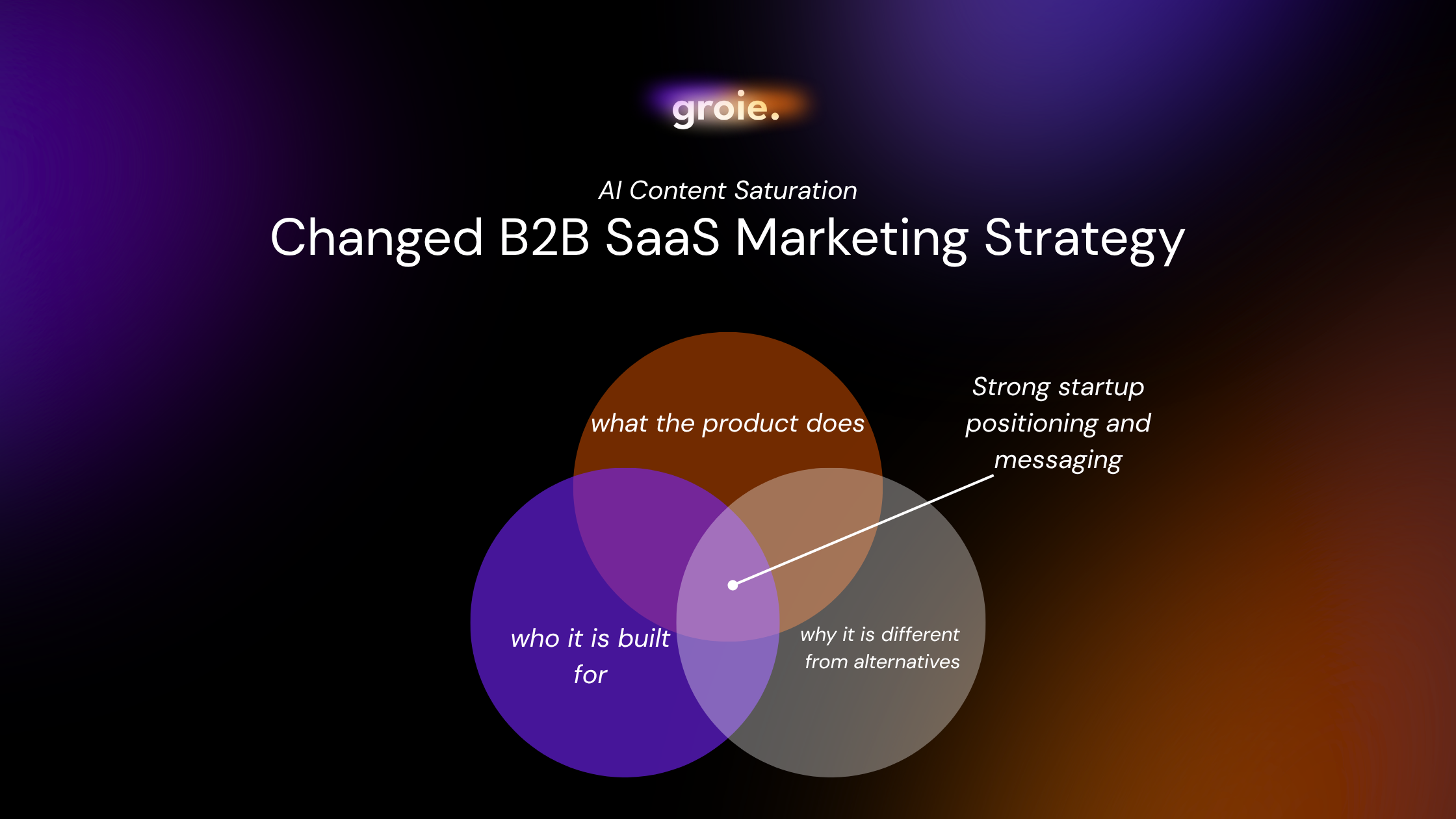
Strong startup positioning and messaging explain:
- what the product does
- who it is built for
- why it matters now
- why it is different from alternatives
- why buyers should trust the company
Many founders build strong personal brands while their actual startup brand positioning remains unclear. That creates a major growth problem later. Because when buyers move from the founder’s content to the company website, the messaging often collapses.
- The positioning is vague
- The ICP is unclear
- The product pages are weak.
The differentiation is generic. And the company has no real inbound marketing for SaaS startups infrastructure beyond founder visibility.
Buyers Are Researching Before They Ever Talk To You
According to G2’s 2025 Buyer Behavior Report, nearly two-thirds of software buyers prefer engaging with sales teams only in the later stages of the buying process. This completely changes how SaaS GTM strategy should work. Modern B2B buyers research independently before booking demos. They compare alternatives on Google, Reddit, LinkedIn, review platforms, AI search tools, communities, and industry forums. That means startups need more than founder visibility.
They need:
- SEO visibility
- educational content
- product marketing for SaaS startups
- implementation clarity
- category positioning
- use-case content
- buyer-focused landing pages
- trust signals
- demand generation infrastructure
This is why product marketing for SaaS startups is becoming more important than pure founder-led growth.
What Replaces Founder-Led Marketing?
The answer is not faceless corporate marketing. And it is definitely not publishing more AI-generated content. What replaces founder-led marketing is trust-led marketing for startups. The companies winning right now are building systems that combine:
- founder content marketing
- startup marketing strategy for pre-seed startups
- SEO and AEO visibility
- community-led growth SaaS strategies
- educational content ecosystems
- product positioning
- sales enablement
- B2B SaaS demand generation systems
- conversion-focused websites
- customer proof
- scalable inbound infrastructure
This is how SaaS startups should market in 2026. Not by depending entirely on one founder’s energy. But by building a growth system around trust.
Why Personal Branding Alone Is Not Enough For SaaS
A founder can create attention. But attention without infrastructure rarely compounds into pipelines. This is why personal branding alone is not enough for SaaS anymore. If a founder stops posting for one month, does the company still generate inbound leads?
- If buyers discover the startup through search instead of LinkedIn, does the website still convert?
- If someone lands on the homepage without knowing the founder first, will they instantly understand the product?
These are the questions modern early-stage SaaS marketing teams need to answer. Because the best marketing strategy for early-stage SaaS startups today is not simply “post more.” It is to reduce buyer uncertainty faster than competitors do.
The Rise Of Trust-Led Marketing
Trust-led marketing for startups focuses on building confidence across the entire buyer journey.
That includes:
- clear startup positioning and messaging
- educational long-form content
- SEO-driven discovery
- AEO-focused FAQs
- customer proof
- implementation clarity
- founder POV integrated into company messaging
- product education
- category differentiation
- scalable SaaS GTM strategy
This is also why marketing for Series A startups is evolving rapidly. Series A buyers expect maturity. They expect operational clarity. They expect category expertise. And they expect startups to communicate value clearly without relying entirely on founder charisma.
Building Trust Is Becoming The Real Competitive Advantage
The startups winning in 2026 will still have visible founders. But they will also have:
- strong inbound marketing for SaaS startups
- scalable B2B SaaS marketing strategy
- structured product marketing systems
- SEO and AEO infrastructure
- educational content ecosystems
- community-led growth SaaS initiatives
- consistent sales narratives
- buyer-focused positioning
This is what building trust in SaaS marketing actually looks like. And this is exactly what replaces founder-led marketing. Not less founder visibility. But stronger company infrastructure around it.
Final Thoughts
Founder-led marketing for SaaS startups is not disappearing completely. But founder visibility alone is no longer enough to drive sustainable growth. Buyers are more skeptical. AI content is everywhere. Competition is louder. Trust is harder to earn. The startups that win over the next few years will not necessarily be the loudest founders. They will be the companies with the clearest positioning, strongest educational content, best product marketing systems, and most trustworthy buyer experience. That is the future of B2B SaaS marketing strategy. And most startups are still underestimating how fast this shift is happening.
Work With Groie
At Groie, we help pre-seed to pre-Series A SaaS startups build scalable growth systems beyond fragmented founder-led marketing. From product marketing for SaaS startups and startup positioning and messaging to SEO, AEO, SaaS content marketing strategy, sales enablement, and conversion-focused websites, we help startups build the infrastructure behind sustainable B2B SaaS demand generation. Because how SaaS startups should market in 2026 is changing rapidly. And the companies that grow will not just be the ones creating the most content. They will be the ones buyers instantly understand, trust, and remember.
FAQs
Why is founder-led marketing losing effectiveness?
Founder-led marketing is losing effectiveness because buyers are overwhelmed with repetitive founder content, AI-generated posts, and generic startup advice. AI content saturation marketing has made visibility easier to achieve but harder to trust. Buyers now expect stronger positioning, proof, educational content, and product clarity before purchasing software.
How should pre-seed SaaS startups market themselves in 2026?
How pre-seed SaaS startups should build trust in 2026 starts with positioning, SEO visibility, educational content, and trust-led marketing for startups. Instead of depending entirely on founder visibility, startups should build scalable inbound marketing for SaaS startups through product marketing, content systems, and demand generation infrastructure.
Why are buyers trusting company ecosystems more than personal brands?
Buyers now conduct independent research before talking to vendors. They trust companies that provide educational resources, comparison content, product clarity, implementation transparency, and customer proof. This is why startup brand positioning and product marketing are becoming more important than founder visibility alone.
What is the role of product marketing in early-stage SaaS growth?
Product marketing for SaaS startups helps explain why the product matters, who it is built for, and how it solves operational problems better than alternatives. It supports SaaS GTM strategy, positioning, onboarding, sales enablement, demand generation, and long-term trust-building.
What does a modern SaaS GTM strategy look like?
A modern SaaS GTM strategy combines founder-led marketing strategy, SEO, AEO optimization, educational content, community-led growth SaaS initiatives, product marketing, and scalable B2B SaaS demand generation systems that build trust throughout the buyer journey.
How do AI-generated content and founder fatigue affect startup marketing?
AI-generated content saturation has reduced differentiation across B2B SaaS marketing. At the same time, many founders experience burnout from constantly creating content to remain visible. This is pushing startups toward trust-led marketing systems that rely on positioning, product marketing, inbound discovery, and scalable content ecosystems instead of constant founder activity alone.

Author
Aabha Tiwari
Founder, Groie.
